
 English
Το καλάθι σας είναι άδειο! Ρίξτε μια ματιά στο φανταστικό μας εμπόρευμα!

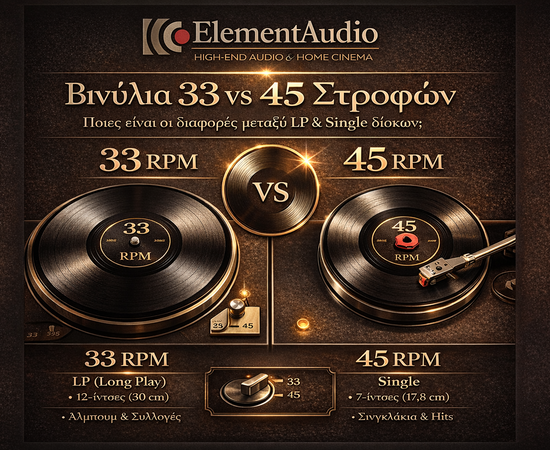
Βινύλια 33 vs 45 Στροφών (RPM): Η αλήθεια του ήχου και γιατί τελικά… δεν υπάρχει δίλημμα!
Πρόσφατα, μέσα από μια πολύ ωραία συζήτηση που είχαμε στα social media της σελίδας μας με έναν φίλο audiophile, έπεσε στο τραπέζι ένα από τα πιο κλασικά—και συχνά παρεξηγημένα—θέματα γύρω από τον αναλογικό ήχο: «Τι γίνεται με τα βινύλια των 45 στροφών; Αξίζουν πραγματικά τη διαφορά σε σχέση με τα κλασικά 33άρια;»
Η σύντομη απάντηση είναι πως ναι, σε καθαρά ακουστικό επίπεδο, τα 45άρια υπερέχουν. Όμως, η ουσιαστική απάντηση είναι πως δεν υπάρχει κανένα δίλημμα. Το καθένα εξυπηρετεί έναν εντελώς διαφορετικό σκοπό και μια διαφορετική φιλοσοφία ακρόασης. Πάμε να δούμε τι ακριβώς συμβαίνει μέσα στα μικροσκοπικά αυλάκια των δίσκων μας.
Ο «Χρυσός Κανόνας»: Το Mastering και η Πηγή είναι το Α και το Ω
Πριν καν αρχίσουμε να συζητάμε για στροφές και ταχύτητες, πρέπει να ξεκαθαρίσουμε τον πιο αμείλικτο νόμο του High-End: Καμία ταχύτητα δεν μπορεί να σώσει μια κακή ηχογράφηση.
Η πηγή (αν πρόκειται για original analog master tapes ή ψηφιακά αρχεία) και η ικανότητα του μηχανικού στο mastering, ορίζουν το τελικό αποτέλεσμα. Ένα βινύλιο 33 στροφών που έχει κοπεί με μεράκι από τις αυθεντικές αναλογικές ταινίες, θα ακούγεται πάντα μαγικά—πολύ καλύτερα από ένα πρόχειρο, εμπορικό 45άρι που προήλθε από ένα συμπιεσμένο ψηφιακό αρχείο. Το βάρος του δίσκου (π.χ. 180gr) και οι αυξημένες στροφές απλώς αναδεικνύουν την πληροφορία που ήδη υπάρχει. Αν η πληροφορία είναι κακή εξ αρχής, απλά θα ακούσετε... ένα κακό αποτέλεσμα με μεγαλύτερη ανάλυση.
Έχοντας αυτό ως απόλυτο δεδομένο, πάμε να δούμε τι συμβαίνει όταν έχουμε εξίσου εξαιρετικό audiophile mastering και στις δύο ταχύτητες.
Η Επιστήμη πίσω από τις Στροφές (RPM)
Στην αναλογική αναπαραγωγή, όλα καταλήγουν σε έναν απλό κανόνα της φυσικής: περισσότερη ταχύτητα = περισσότερος χώρος για πληροφορία.
Φανταστείτε τον ήχο σαν ένα αυτοκίνητο που πρέπει να διανύσει μια διαδρομή. Σε έναν δίσκο 33 ⅓ RPM, η βελόνα του πικάπ διαβάζει περίπου 16 ίντσες μουσικής πληροφορίας το δευτερόλεπτο (στα εξωτερικά αυλάκια). Σε έναν δίσκο 45 RPM, η ίδια βελόνα διαβάζει περίπου 22 ίντσες το δευτερόλεπτο. Επειδή ο δίσκος γυρίζει πιο γρήγορα, τα πολύπλοκα ηχητικά κύματα που είναι χαραγμένα στο βινύλιο "απλώνονται" σε πολύ μεγαλύτερο μήκος. Δεν είναι τόσο ασφυκτικά συμπιεσμένα μεταξύ τους.
Αυτό σημαίνει ότι η βελόνα της κεφαλής σας (το λεγόμενο tracking ability) έχει πολύ περισσότερο "χώρο" για να διαβάσει τις ανεπαίσθητες μικρολεπτομέρειες με χαρακτηριστική άνεση και ακρίβεια.
«Το αποτέλεσμα είναι μετρήσιμο και άμεσα ακουστό: Τεράστιες δυναμικές, αστραπιαίες μεταβατικές, πεντακάθαρες υψηλές συχνότητες χωρίς παραμόρφωση και δραματική μείωση του ενοχλητικού Inner Groove Distortion προς το κέντρο του δίσκου.»
Το Τίμημα της Απόλυτης Ποιότητας (Γιατί υπάρχουν τα 33άρια;)
Αν τα 45άρια είναι ακουστικά τόσο ανώτερα, γιατί δεν τυπώνονται όλα τα βινύλια έτσι; Εδώ μπαίνει ο παράγοντας της πρακτικότητας και της συνολικής εμπειρίας. Για να χωρέσει ένα ολόκληρο άλμπουμ στις 45 στροφές (λόγω των απλωμένων αυλακιών), απαιτείται ο διπλάσιος χώρος. Ένα τυπικό LP μετατρέπεται αυτόματα σε διπλό δίσκο. Αυτό σημαίνει ότι έχετε περίπου 10 με 12 λεπτά μουσικής ανά πλευρά. Κάθε δύο ή τρία τραγούδια, πρέπει να σηκώνεστε για να αλλάξετε πλευρά.
Για πολλούς μουσικόφιλους, αυτό "σπάει" τη μαγεία της ακρόασης. Το κλασικό 33άρι προσφέρει 22-25 λεπτά αδιάκοπης μουσικής ροής. Σας επιτρέπει να καθίσετε αναπαυτικά, να κλείσετε τα μάτια και να χαθείτε μέσα στο έργο του καλλιτέχνη, ακριβώς όπως το είχε οραματιστεί.
Το «Κρυφό Όπλο» των 33 Στροφών: Half-Speed Mastering
Εδώ τα πράγματα γίνονται πραγματικά ενδιαφέροντα. Υπάρχει μια εξαιρετικά εξειδικευμένη και ακριβή τεχνική που δίνει στα 33άρια την απόλυτη ρεβάνς: το περίφημο Half-Speed Mastering (μια τεχνική που απογείωσαν θρυλικές εταιρείες όπως η Mobile Fidelity - MoFi και τα Abbey Road Studios).
Πώς λειτουργεί; Κατά τη διαδικασία κατασκευής της μήτρας του δίσκου στο εργοστάσιο (στο cutting lathe), ο μηχανικός ήχου κάνει κάτι παράδοξο: βάζει τόσο την πηγή (το master tape) όσο και τον δίσκο κοπής (lacquer) να παίξουν ακριβώς στη μισή ταχύτητα (δηλαδή στις 16 ⅔ στροφές).
Γιατί κάνει τόση διαφορά; Η κεφαλή που χαράζει το βινύλιο είναι ένα βαρύ μηχανικό εξάρτημα. Όταν πρέπει να χαράξει πολύπλοκες και ταχύτατες υψηλές συχνότητες σε πραγματικό χρόνο, ζορίζεται (high-frequency roll-off). Δίνοντάς της τον διπλάσιο χρόνο να κάνει τη δουλειά της (λόγω της μισής ταχύτητας), χαράζει τα αυλάκια με μικροσκοπική, "χειρουργική" ακρίβεια, χρησιμοποιώντας το 1/4 της ηλεκτρικής ενέργειας.
Όταν εσείς βάζετε αυτόν τον δίσκο στο πικάπ σας και τον παίζετε στην κανονική ταχύτητα των 33 ⅓ στροφών, ο ήχος κυριολεκτικά "ξεδιπλώνεται". Ακούτε αδιανόητα καθαρές υψηλές, μηδενική παραμόρφωση και εκπληκτικό διαχωρισμό οργάνων, πλησιάζοντας ενοχλητικά κοντά την απόδοση ενός 45αριού, διατηρώντας όμως την άνεση των 22+ λεπτών μουσικής ανά πλευρά!
Το Συμπέρασμα: Τι να επιλέξω;
Η επιλογή εξαρτάται από τον τρόπο που ακούτε:
- Θέλετε τη μέγιστη άνεση ροής για να χαλαρώσετε; Το 33 ⅓ RPM παραμένει ο βασιλιάς.
- Θέλετε ποιότητα 45 στροφών χωρίς να σηκώνεστε κάθε 10 λεπτά; Αναζητήστε τις κοπές 33 ⅓ RPM Half-Speed Mastering (το απόλυτο "sweet spot").
- Θέλετε την απολύτως κορυφαία, ωμή ηχητική εμπειρία και δεν σας πειράζει η "ιεροτελεστία" της αλλαγής; Βάλτε στο πλατό μια 45άρα audiophile κοπή!
Όπως είπαμε και με τον φίλο της σελίδας μας: Για να ακούσετε όλες αυτές τις διαφορές, το σύστημά σας (και κυρίως η πηγή σας) πρέπει να μπορεί να τις αναδείξει. Ένα σωστά ρυθμισμένο πικάπ, μια ποιοτική κεφαλή και ένα διαφανές Phono Stage είναι τα απαραίτητα "κλειδιά" για να ξεκλειδώσετε τα μυστικά που κρύβουν τα αυλάκια. Βρείτε τα πάντα στην Element Audio!